Build Real Income with AI-Powered Leverage
Build Real Income with AI-Powered Leverage
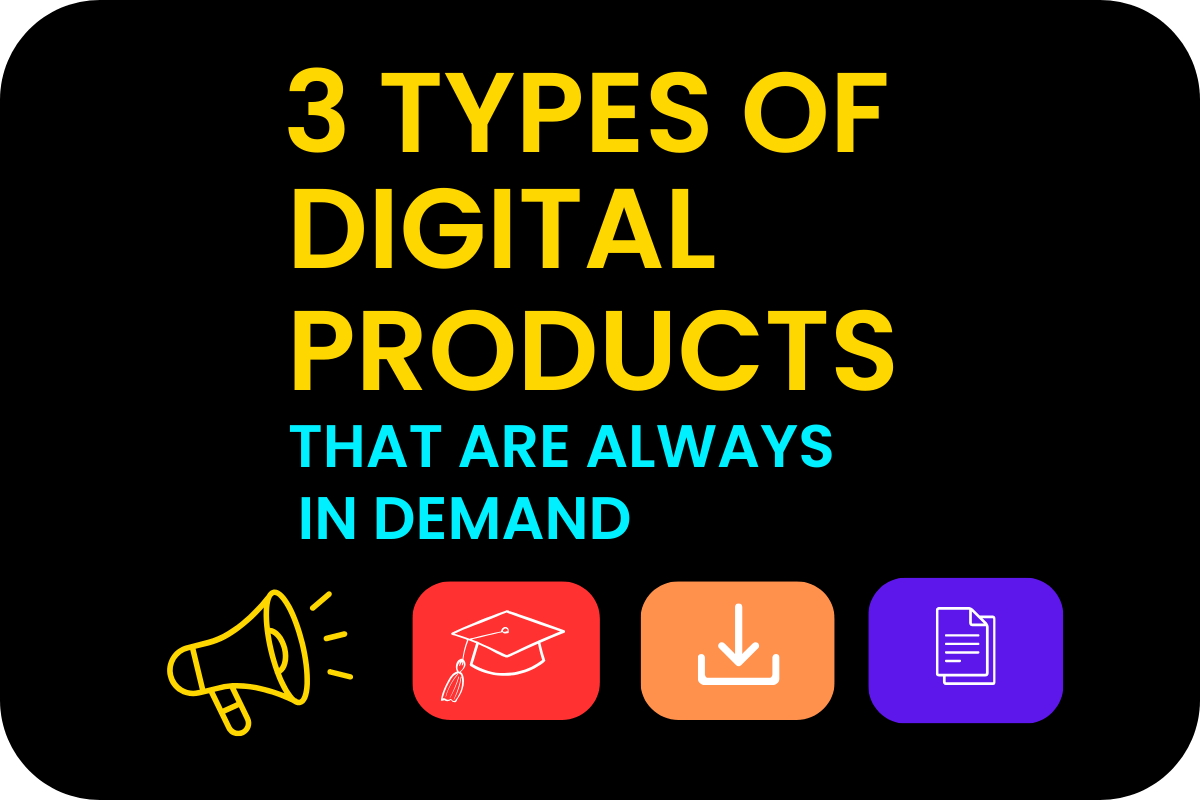
Most beginners struggle with digital products because they don’t know what to sell. This article breaks down three digital product types that stay in demand year after year and shows how to choose the right one without guessing, trend-chasing, or overbuilding.
The hardest part of building a digital product isn’t the tech, the platform, or the marketing.
It’s deciding what to sell.
Most beginners don’t fail because they can’t create. They fail because they guess. They chase ideas that sound interesting, copy what looks popular, or build something without knowing if there’s real demand on the other side.
Creativity isn’t the problem. Markets are.
Digital products don’t sell because they’re clever. They sell because they’re built inside categories people already spend money in, regardless of trends, algorithms, or economic cycles.
That’s what “always in demand” really means.
It’s not my opinion. It’s not hype. It’s repeatable buying behavior that shows up year after year. When you build inside those lanes, you’re no longer hoping someone wants what you made, you’re meeting demand that already exists.
This article doesn’t give you a list of trendy ideas to chase. It gives you filters. Categories that persist, patterns that hold, and product types that continue selling even when everything else cools off.
Because when you stop chasing ideas and start building inside proven categories, the odds shift immediately in your favor.
If you look at digital products that keep selling year after year, the pattern is obvious in hindsight: they’re built around demand, not novelty.
Most products fade because they’re tied to a moment. A trend. A platform tactic. A new tool everyone is excited about for six months. Once attention shifts, demand disappears with it.
Evergreen digital products work differently. They’re anchored to problems people keep trying to solve, regardless of what’s happening in the market.
Three forces drive that persistence:
1. Pain doesn’t expire
People don’t suddenly stop wanting to earn more money, save time, get healthier, or feel less overwhelmed. The context changes, but the underlying frustration stays the same. Products that address real pain points don’t rely on hype to sell, they rely on relevance.
2. Progress is always in demand
Buyers are constantly looking for the next step forward. Not a complete transformation overnight, just progress. Products that promise a clear, achievable outcome continue to attract buyers because progress compounds, even when trends don’t.
3. Payoff beats novelty every time
A flashy idea might grab attention, but results keep wallets open. Digital products that help someone reach a tangible outcome, finish faster, avoid mistakes, or unlock a win, don’t need reinvention every year. They just need to stay aligned with the result.
This is why formats can change while demand stays steady. A guide might become a template. A course might become a checklist. A workbook might turn into a dashboard. The packaging evolves, but the need underneath it doesn’t.
That’s also why looking at profitable digital product ideas starts with demand patterns, not inspiration. Creativity matters, but markets decide what lasts.
Once you understand why demand sticks, the next step is recognizing the categories where it consistently shows up.
Education products are the most misunderstood category in digital products, especially by beginners.
Most people hear “education” and immediately think of huge courses, endless video libraries, or 200-page PDFs. That’s not what actually sells long term.
What people pay for is clarity and speed.
They don’t want more information. They want to get from point A to point B faster, with fewer mistakes and without being overwhelmed. That’s why focused education products outperform bloated ones almost every time.
Here’s what that looks like in practice:
People pay to learn faster, not longer
A short guide that shows someone how to land their first freelance client will often outsell a massive “complete freelancing course.” The value isn’t volume, it’s direction.
Small, focused education beats information dumps
The strongest education products solve one specific problem:
– How to launch a digital product in a weekend
– How to price a first offer
– How to set up a simple funnel
When the outcome is clear, buyers don’t hesitate.
Education isn’t just courses
PDF guides, checklists, templates, swipe files, email lessons, and mini-courses all count as education products. The format matters far less than the result.
This is also why education is often the easiest entry point for beginners building their first offer. You’re packaging what you already understand into a shortcut someone else is willing to pay for, not inventing something from scratch. That’s exactly the approach outlined in Digital Product for Beginners.
But not everyone wants to learn.
Many people don’t want the explanation at all. They just want the work done for them.
If education products sell clarity, tools and templates sell speed.
This category exists for one simple reason: many buyers don’t want to learn how to do something. They want it done faster, with fewer decisions and less friction.
That’s why templates, trackers, dashboards, swipe files, and ready-made systems keep selling year after year.
Buyers are paying to skip steps
A template isn’t valuable because it’s complex. It’s valuable because it removes uncertainty. When someone can plug in their own information and move forward immediately, the decision to buy becomes easy.
Specific beats generic every time
A “content calendar” is vague.
A “30-day content calendar for solo creators selling digital products” feels built for one person, and that person is far more likely to buy.
The narrower the use case, the stronger the conversion.
Simpler products often convert faster
Many of the highest-converting digital products are shockingly simple:
– A Notion dashboard
– A spreadsheet
– A checklist
– A swipe file
They work because they solve a real task someone already needs to complete.
This is also why many creators start by shipping something small and useful first. You’re not trying to build a brand-defining product on day one, you’re testing demand and momentum. That exact approach is outlined in Weekend-Ready Passive Income, where speed and usefulness matter more than polish.
Education teaches.
Tools execute.
But there’s another category people will always pay for, even when they don’t consciously realize that’s what they’re buying.
Products that save time usually sell the fastest. Templates, checklists, and simple tools convert well because buyers can use them immediately without a learning curve.
Often, yes. Templates and tools are faster to create, easier to price, and simpler to explain. Courses work too, but beginners usually get quicker wins with focused, plug-and-play products.
Absolutely. Buyers care more about usefulness than complexity. A simple tool that solves one specific problem clearly will outperform a complex product that tries to do too much.

The Backdoor Blueprint is the 12-page starter guide to the Infinite Hustle Lab system. It's the exact strategy we use to build lean, scalable digital income streams.
Trusted by 500+ solopreneurs building real systems around the world.

The AI Income Stack gives you five proven ways to turn tools into income — including self-publishing, affiliate funnels, and automation-based product sales.
Perfect for anyone starting from scratch who wants to build smarter.

This is the master strategy guide for monetizing automation — without gimmicks or hype. If you want to build real income using smart tools and scalable systems, this is where to start.
Transformation products aren’t really about information. They’re about movement.
The buyer isn’t paying for a PDF, a video, or a framework. They’re paying to move from a clear before state to a desired after state.
That’s why this category never disappears.
Health, wealth, and lifestyle markets persist regardless of platforms, tools, or trends. People always want to feel better, earn more, get unstuck, or improve how they live. The specifics evolve, but the underlying desire stays the same.
The mistake beginners make is assuming transformation requires authority, credentials, or a “guru” persona. It doesn’t.
What matters is structure, not status.
Strong transformation products share a few traits:
• A clearly defined starting point (where the buyer is now)
• A believable end result (where they want to be)
• A simple, step-by-step path between the two
That path can be short. In fact, shorter transformations often sell better.
“Lose 50 pounds” feels overwhelming.
“30-day strength plan for new dads” feels doable.
“Build a business” feels vague.
“From zero to first digital product sale” feels concrete.
This same before-and-after framing is how simple systems turn into real sales, because buyers aren’t buying theory, they’re buying progress they can see and measure.
Transformation products work best when they:
• Focus on one narrow outcome
• Remove unnecessary friction
• Make the next step feel achievable, not intimidating
You don’t need to be the end destination. You just need to help someone reach the next milestone.
Knowing the categories is helpful. Choosing the right one for you is what actually unlocks momentum.
One of the fastest ways to get stuck is trying to pick the perfect product instead of the right one for where you are.
Beginners don’t fail because they choose the wrong category. They fail because they choose something that doesn’t fit how they work, how much time they have, or how they plan to get attention.
Here’s a simple filter to cut through the paralysis.
Skill fit
Start with what you can already explain, organize, or simplify. You don’t need mastery. You need enough clarity to help someone take the next step.
Time fit
Some products are built in focused bursts. Others require ongoing updates or support. Choose something that matches your real schedule, not your ideal one.
Interest fit
If you wouldn’t enjoy improving the product after launch, don’t build it. Early momentum comes from refinement, not just shipping.
Distribution fit
This is where most beginners stumble. A strong product still needs a distribution path. Even the best offer won’t move if nothing consistently brings people to it.
That’s why learning how to turn content into a system that feeds your offer matters more than polishing features.
The goal isn’t to lock yourself into a lifelong niche. It’s to choose a product type that fits you well enough to ship, sell, and learn.
Once you stop guessing and start choosing intentionally, everything downstream gets easier.
Knowing what to sell is only half the equation.
The reason most digital products never make it past a few sales isn’t the idea, it’s the lack of a system around it. No clear path from interest to trust to purchase. No structure that lets a good product compound instead of stall.
That’s exactly what The Backdoor Blueprint is designed to fix.
It shows you how a simple digital product turns into a working system. How traffic, email, and offers connect so you’re not guessing what comes next.
If this article helped you choose what to build, the Blueprint shows you how it all fits together.
Get The Backdoor Blueprint (Free)
See how a single product becomes a system that actually sells.
The Backdoor Blueprint is the 12-page starter guide to the Infinite Hustle Lab system. It's the exact strategy we use to build lean, scalable digital income streams.
Trusted by 500+ solopreneurs building real systems around the world.
The AI Income Stack gives you five proven ways to turn tools into income — including self-publishing, affiliate funnels, and automation-based product sales.
Perfect for anyone starting from scratch who wants to build smarter.
This is the master strategy guide for monetizing automation — without gimmicks or hype. If you want to build real income using smart tools and scalable systems, this is where to start.